
Why UAV, UUV, and UGV Designers Are Moving Toward Direct-Drive Linear Motors
The Reliability Challenge in Autonomous System Design
Autonomous systems; Uncrewed Aerial Vehicles (UAVs), Uncrewed Underwater Vehicles (UUVs), Uncrewed Ground Vehicles (UGVs), and Uncrewed Surface Vessels (USVs), demand a lot out of their motion control system. These systems require an actuation solution capable of delivering fast response, precise positioning, and reliable long-term operation in dynamic and demanding environments.
.png?width=1280&height=720&name=Blog%20Feature%20Images%20(16).png)
Conventional rotary-to-linear systems often introduce backlash, latency, mechanical complexity, and additional failure points that impact control stability and system reliability. Geartrains, linkages, lead screws, hydraulics, and pneumatics increase integration complexity while requiring ongoing maintenance in environments where serviceability is limited. For engineers designing mission-critical autonomous platforms, direct-drive linear motor technology is becoming recognized as a more reliable and responsive approach to motion control.
Traditional Actuation Architectures are Falling Short
|
Actuation Type |
Common Limitations in Autonomous Systems |
|
Hydraulics |
Leakage, maintenance, complexity |
|
Pneumatics |
Compressibility, poor precision |
|
Rotary & Linkage |
Backlash, added components |
|
Lead Screws |
Wear, friction, lower speed |
|
Geartrains |
Backlash, latency, mechanical losses |
Why Engineers Are Moving Towards Direct-Drive Actuation
1. Faster Response and Lower Latency
Autonomous systems rely on high-bandwidth actuation to maintain stability, positioning accuracy, and rapid corrective response. Conventional transmission systems introduce backlash, friction, and reflected inertia into the control loop, reducing responsiveness and limiting corrective motion speed. By converting electrical energy directly into linear force, direct-drive systems achieve faster force transmission, lower moving inertia, and higher bandwidth motion control without the mechanical losses associated with gears, belts, or rotary conversion mechanisms. In direct-drive systems, magnetic force is applied immediately to the moving element, eliminating delays associated with mechanical power transmission and enabling closed-loop bandwidths up to 3 kHz.
2. Higher Reliability, Less Maintenance With Fewer Mechanical Components
Reliability is critical in autonomous systems operating in remote or inaccessible environments where serviceability is limited. Conventional actuation architectures rely on multiple mechanical components including gearboxes, lead screws, belts, seals, and hydraulic assemblies that are subject to wear, backlash, hysteresis, and mechanical failure over time. As these components degrade positioning accuracy and control consistency can deteriorate. Direct-drive linear motors reduce mechanical complexity by eliminating many of the intermediary components that commonly require re-calibration, lubrication, or replacement. With fewer wear surfaces and reduced mechanical contact, direct-drive systems experience lower friction, less hysteresis, and more consistent force output over extended operating cycles.
3. Improved Precision and Force Control
In uncrewed air, land, and sea applications, precision is not only an operational necessity, but a regulatory requirement. AI, high-resolution cameras, radar, LiDAR, and other sensor systems cannot deliver this precision alone. Unclear sight lines remain a fundamental limitation. They can be blinded by heavy fog, debris, water distortion, or even direct sunlight. These systems depend on precise actuation to function as their “eyes”, stabilizing, positioning, and orienting sensors in real-time. Positioning error, overshoot, and inconsistent force output can compromise targeting accuracy, sensor alignment, and navigation. Direct-drive linear motors apply force directly to the load, with a frictionless design free of backlash and the transmission losses associated with gears, belts, and rotary conversion. This enables finer position resolution and highly repeatable smooth motion profiles.
4. Control Stability & Closed-Loop Performance
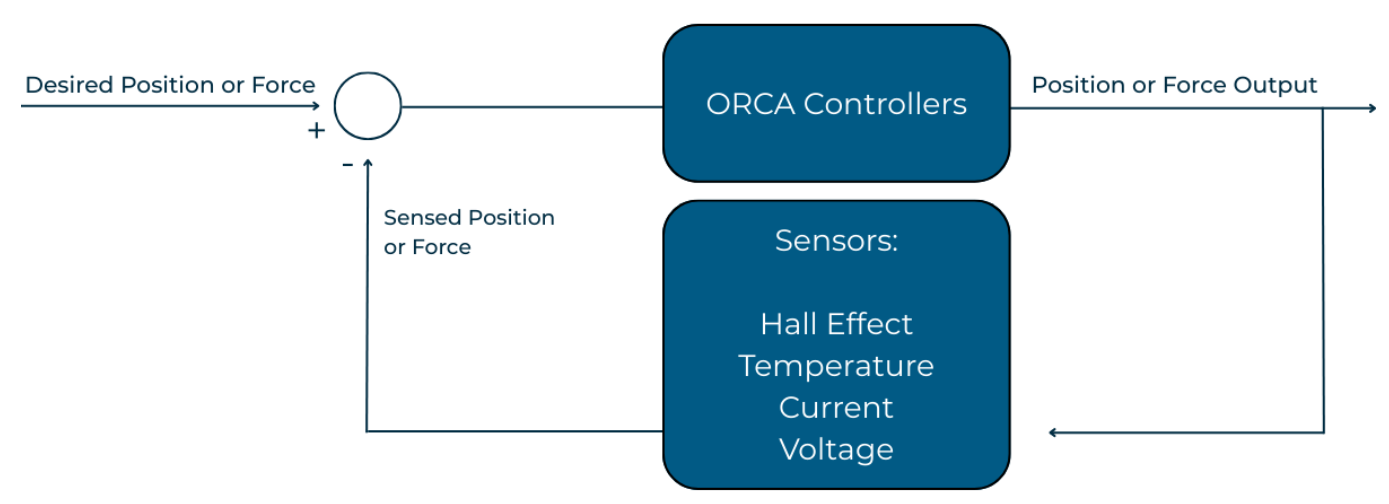
In uncrewed systems instability is ever-present. It can occur with turbulent flight conditions, traction loss, aggressive steering, payload shifts, and many other operating conditions that are subject to rapid changes. Without control stability, failures compound making systems unreliable, dangerous, and prone to physical crashes. Backlash, compliance, friction, and inconsistent force transmission can destabilize control systems and limit disturbance rejection capability. Direct-drive linear motors improve control loop stability by applying force directly to the load with minimal latency. ORCA motors support closed-loop communication rates up to 3 kHz for high-speed feedback, responsive motion correction, and real-time system monitoring. This is especially relevant in UAVs, where flight control systems are making hundreds of micro adjustments per second to execute high-frequency corrective motions to compensate for turbulence, vibration, and rapid attitude disturbance.
Meet our Highest Force Motor: ORCA-15-48V
Outputting 1,061 N of maximum force, the ORCA-15-48V motor offers: 3 kHz response, native closed-loop control, integrated force feedback and sensing, in an IP68 rated design.
Direct-Drive Actuation Requirements Across Types of Autonomous Systems
|
|
Primary Motion Control Challenge |
Direct-Drive Linear Motor Solution |
|
Uncrewed Aerial Vehicles (UAVs) |
|
|
|
|
Weight constraints, turbulent flight conditions, stabilization bandwidth, aerodynamic control |
High force density and low moving mass enable fast corrective motion and precise stabilization in dynamic flight conditions |
|
Uncrewed Underwater Vehicles (UUVs) |
|
|
|
|
Pressure exposure, corrosion, inaccessible maintenance environments, precision underwater positioning |
Sealed direct-drive architecture reduces maintenance requirements while delivering precise force control |
|
Uncrewed Ground Vehicles (UGVs) |
|
|
.png?width=2000&height=2000&name=Autonomous%20Systems%20Square%20UXV%20Photos%20(3).png) |
Shock loading, vibration, traction instability, continuous duty cycles |
Improved control consistency under variable terrain loading with fewer mechanical wear components |
|
Uncrewed Surface Vehicles (USVs) |
|
|
|
|
Wave-induced motion, steering correction, inaccessible maintenance environments |
High-bandwidth actuation enables faster steering correction and stabilization in continuously changing marine conditions |
|
Remotely Operated Vehicles (ROVs) |
|
|
|
|
Tether-induced disturbance, subsea pressure exposure, maintenance accessibility |
Precise force-control and reliable long-cycle operation in limited serviceability conditions |
.png?width=2000&height=2000&name=Autonomous%20Systems%20Square%20UXV%20Photos%20(1).png)
.png?width=2000&height=2000&name=Autonomous%20Systems%20Square%20UXV%20Photos%20(2).png)
.png?width=342&height=342&name=Autonomous%20Systems%20Square%20UXV%20Photos%20(5).png)
.png?width=344&height=344&name=Autonomous%20Systems%20Square%20UXV%20Photos%20(4).png)
What Makes ORCA Motors Especially Well Suited
5.1 High Force Density in a Compact Package Without Increasing Platform Size or Weight
Force density is a critical design consideration in autonomous systems where payload capacity, installation space, and power availability are limited. UAVs require lightweight actuation to preserve flight endurance, while subsea and mobile robotic platforms often have limited space for actuation systems. ORCA motors generate up to 1061 N of force in a compact tubular design without the added weight and volume of gearboxes, belts, or rotary conversion systems. The most compact ORCA motor, capable of generating 281 N of force, weighs approximately 4.5 lbs.
5.2 Faster System Response for Real-Time Control
Real-time responsiveness is built directly into the ORCA motor architecture. ORCA motors are designed for minimal processing overhead, deterministic behaviour, and rapid response to dynamic system inputs. A bare-metal system architecture combined with an ARM Cortex-M4F microcontroller and Nested Vectored Interrupt Controller (NVIC) enables deterministic interrupt handling and predictable control timing. The motor electronics are engineered with minimal analog and digital signal filtering, allowing tighter control loops and faster system response. Closed-loop communication rates up to 3 kHz enable high-frequency position feedback and rapid corrective motion. Smooth acceleration and deceleration enables safe and predictable motion profiles, regardless of the external operating conditions.
5.3 Reduced Mechanical Complexity and Failure Points
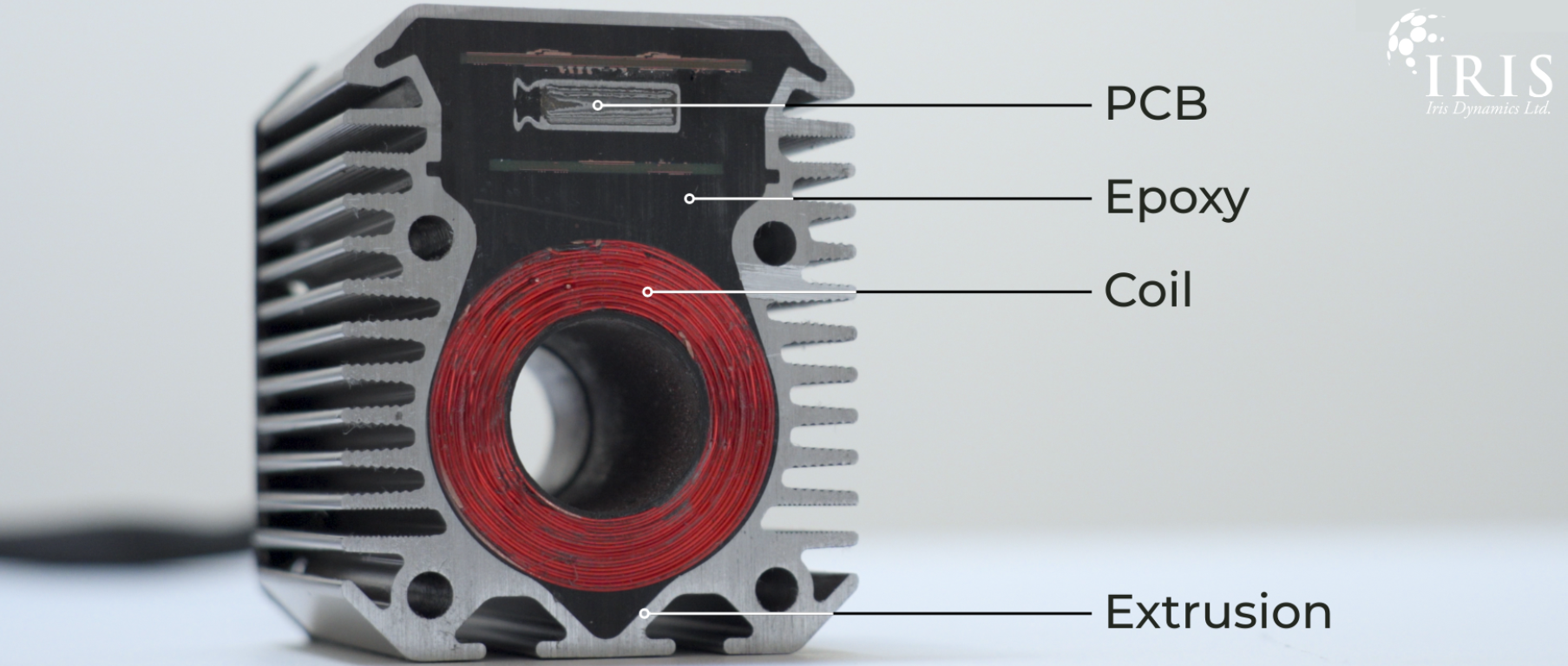
Traditional linear actuation systems often require multiple external components; motor controllers, encoders, drivers, gearboxes, belts, couplings, and rotary-to-linear conversion mechanisms, increasing integration complexity and creating additional points of failure. ORCA fully integrated motors include the motor driver, logic controller, position and force sensing, amplifiers, and other motion control electronics directly into PCB, reducing external hardware requirements and offering tight system integration. As these components live within the stator, the only moving part in the ORCA motor is the stainless steel shaft. A minimal friction design leaves the Igus bushings as the only wear component.
5.4 Energy Efficiency for Mobile Platforms
Uncrewed systems benefit from low voltage DC (12V - 48V) as it optimizes SWaP-C (Size, Weight, Power, and Cost), expanding mission capability and payload capacity while reducing the need for bulky power conversion hardware, oversized heatsinks, and additional electrical infrastructure. Battery-powered DC components are the standard in autonomous systems, eliminating power inverters and maximizing energy efficiency. ORCA motors operate within standard 12–60 VDC power systems commonly used in mobile robotics, UAVs, and marine platforms, simplifying electrical integration.
5.5 Reliability in Harsh Environments
ORCA motors’ electrical components and drivers, controllers, force and position sensing, are epoxy potted in the stator, fully encapsulated to strengthen resistance against moisture, corrosion, and long-term mechanical degradation. The motors are IP68 rated, indicating that they’re fully protected against dust ingress and capable of continuous water immersion. Get the Guide to IP Ratings for Electric Linear Motors here. Shock and vibration heavily contributes to premature failure in electromechanical assemblies. ORCA motors have been rigorously tested at QAI facilities - evaluating vibration resonance through resonance frequency across all major axes with frequencies reaching 10 Hz, the motor displayed no resonance frequency. Endurance tests applying 30 Hz of vibration for 90 minutes in each major axis direction revealed no mechanical or operational reduction in function. For more in depth QAI testing, refer to our article on Reliability of Electric Linear Motors in Extreme Environments. A suite of Electrotechnical Commissions (IEC) tests are listed below:
|
IEC 60068:2-27 |
Mechanical Shock |
|
IEC 60068:2-6 |
Vibration |
|
IEC 60068:2-11 |
Salt Spray |
|
IEC 60068:2-1 |
Cold Exposure (-50C) |
|
IEC 60068:2-2 |
Heat Exposure (+50C) |
|
IEC 69529:14.2.8 |
IPX8 Continuous Immersion |
Subsea Testing
ORCA motors have undergone subsea pressure testing, including repeated operational cycles to approximately 12 MPa (~1,750 psi) equivalent to over 1,200 meters (3,940 ft) of seawater depth. Additional destructive testing demonstrated continuous operation up to approximately 69 MPa (10,000 psi) equivalent to 6,900 m (22,600 ft). Continued exploratory harsh-validation work is being pursued.
Case Study: Uncrewed Surface Vehicle Steering
Objective
A leading defence technology company developing autonomous USVs required a compact, low-voltage actuation system for steering and directional control in harsh marine environments. The platform demanded reliable operation under continuous exposure to cold water, temperature fluctuations, vibration, and corrosive operating conditions where serviceability was extremely limited. Consistent thermal performance under load, integrated force control, and simplified system architecture that could support rapid deployment across a growing fleet of autonomous vessels was critical.
Outcome
The company progressed from prototype development to field-deployed autonomous vessels within a year, with ORCA motors supporting both rapid prototyping and full production deployment. The integrated direct-drive architecture reduced system complexity, improved steering reliability, minimized external hardware requirements, and enabled responsive programmable control under dynamic marine conditions. Built-in force control and embedded motion electronics simplified integration while reducing the overall hardware footprint and maintenance burden. As the company continues expanding its autonomous vessel lineup, the ORCA platform supports rapid deployment across multiple USV configurations with consistent performance and reduced integration overhead.
.png?width=1100&height=163&name=CTA%20Banners%20for%20Blogs%20(11).png)
Some images in this article are conceptual renders for illustrative purposes.