Reliability of our motors and their suitability for a wide range of applications is confirmed through rigorous laboratory testing and extreme use cases. In the lab, ORCA motors have exposed to conditions that exceed recommended operating limits. The testing detailed in this article is conducted at QAI Laboratories in Burnaby, BC.

Environmental, Mechanical, and Thermal Validation of IP68 Electric Linear Motors
This paper examines the reliability of electric linear actuators operating in harsh environments, drawing on laboratory testing, field validation, and material-level design considerations to evaluate performance under mechanical and environmental stress. Many applications now commonly use heavy-duty linear actuators where reliable operation in extreme environments (exposure to moisture, vibration, and contamination) is required.
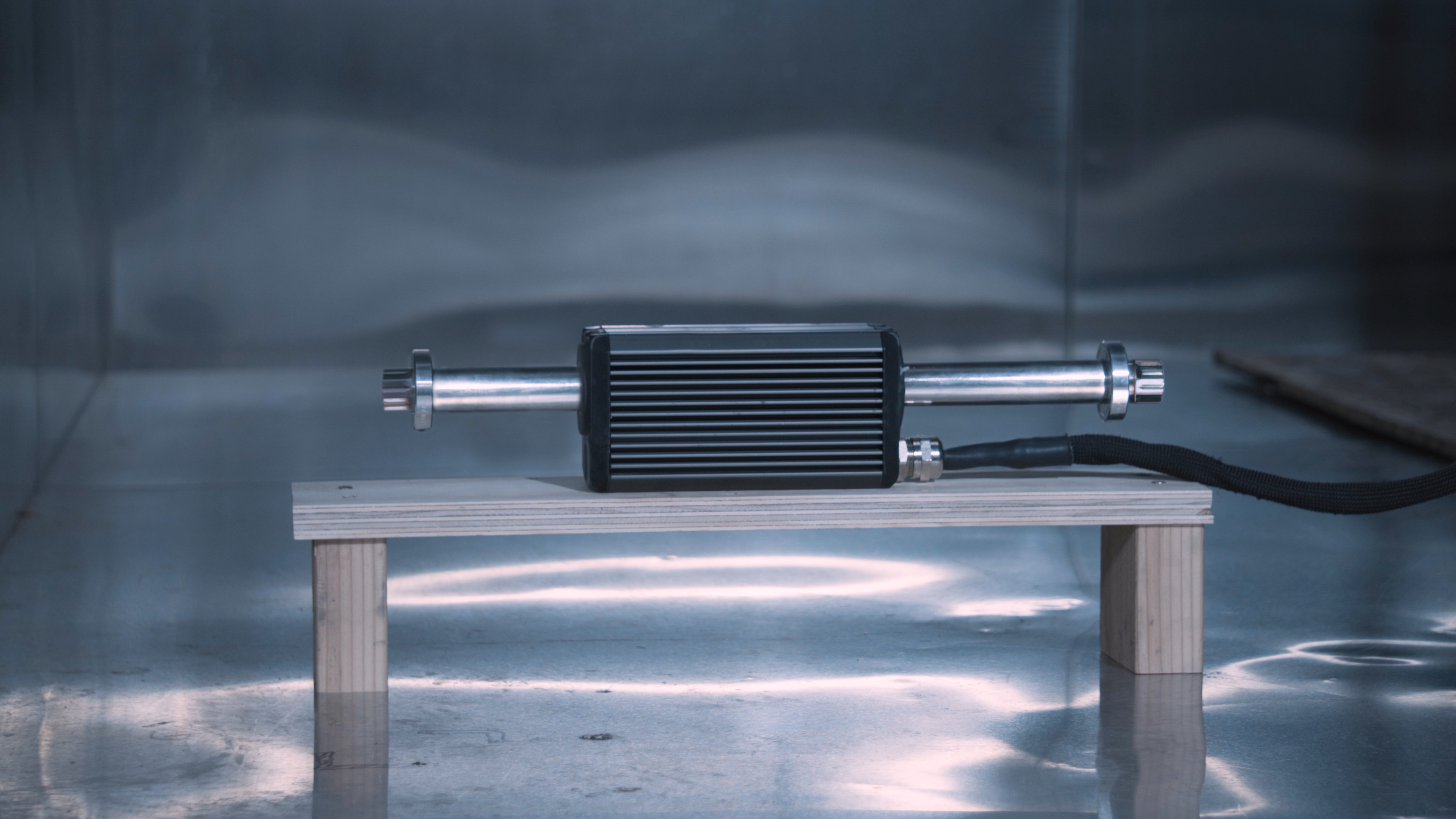
In this context, “extreme conditions” refer to operating environments that go beyond typical industrial settings and often lead to early failure of electromechanical assemblies. These conditions can be broadly categorized into three groups: environmental, mechanical, and thermal. Environmental extremes include prolonged exposure to water, particulate contamination such as dust or dirt, and corrosive agents. Mechanical extremes are characterized by sustained vibration, shock loading, and dynamic excitation across a range of frequencies. Thermal extremes include operation and storage at temperatures significantly below or above standard rated conditions. In many harsh environments (for example, factory automation), electric linear motors have been selected over traditional pneumatic systems due to their durability, repeatability, and low-maintenance architecture.
Potting, Encapsulation, and Environmental Protection of Electric Linear Motors
Encapsulation techniques are commonly used in rugged linear actuator designs to improve resistance to moisture ingress, corrosion, and long-term mechanical degradation. ORCA™ Series Smart Linear Motors are used here as a representative example of a rugged linear motor architecture. With an IP68 rating, they are designed to withstand sustained vibration, corrosive environments, and low-temperature operation, making them well suited for a wide range of industrial and harsh-environment applications.
As a part of the encapsulation process for ORCA motors, a two-part epoxy is poured into the stator assembly from one side. The motors are then cured at elevated temperature in accordance with the resin specifications and subjected to head pressure combined with vibration. This process is designed to minimize air entrapment within the motor housing, ensuring that all internal components, including the coils, PCB, and associated wiring, are fully encased in protective epoxy. As a result, the motor’s internal systems are effectively isolated from and protected against environmental exposure, as shown in Figure 1.
.png?width=1100&height=471&name=Linear%20Motor%20Reliability%20in%20Extreme%20Conditions%20WP%20Graphics%20(1).png)
Figure 1. Cross section of an ORCA Motor with visible internal components and epoxy filling the surrounding volume.
ORCA Motor Reliability
IP68 Waterproof Linear Motor
An IP68 rating indicates that a device is fully protected against dust ingress (IP6x) and capable of continuous water immersion beyond one meter (IPx8). ORCA motors carry an IP68 rating, validated for full submersion at a depth of 1 meter for a duration of 72 hours. Submersion testing was conducted by QAI Laboratories, during which the motors remained fully powered, communicative, and responsive before, during, and after immersion. Learn more about IP ratings here.
Dust-tight performance ensures that particulate contamination such as dirt, sand, or debris cannot enter the motor housing, which eliminates a common failure mode in conventional electromechanical assemblies. This level of environmental isolation is enabled by full stator potting and the absence of internal air volumes that would otherwise allow moisture or contaminants to migrate into sensitive components.
Shock and Vibration Resistance
Vibration is a primary contributor to premature failure in electromechanical assemblies, particularly in systems with multiple moving parts, mechanical interfaces, and internal wiring subject to fatigue. The design of ORCA motors incorporates only one single moving component and a fully encapsulated stator, making the motors highly resistant to external vibration-induced wear and failure and contributing to long-term durability. At the QAI facility, shock resistance tests involved peak accelerations of 20g with a 1 ms duration, after which the motor remained fully operational, shown in Figure 2.
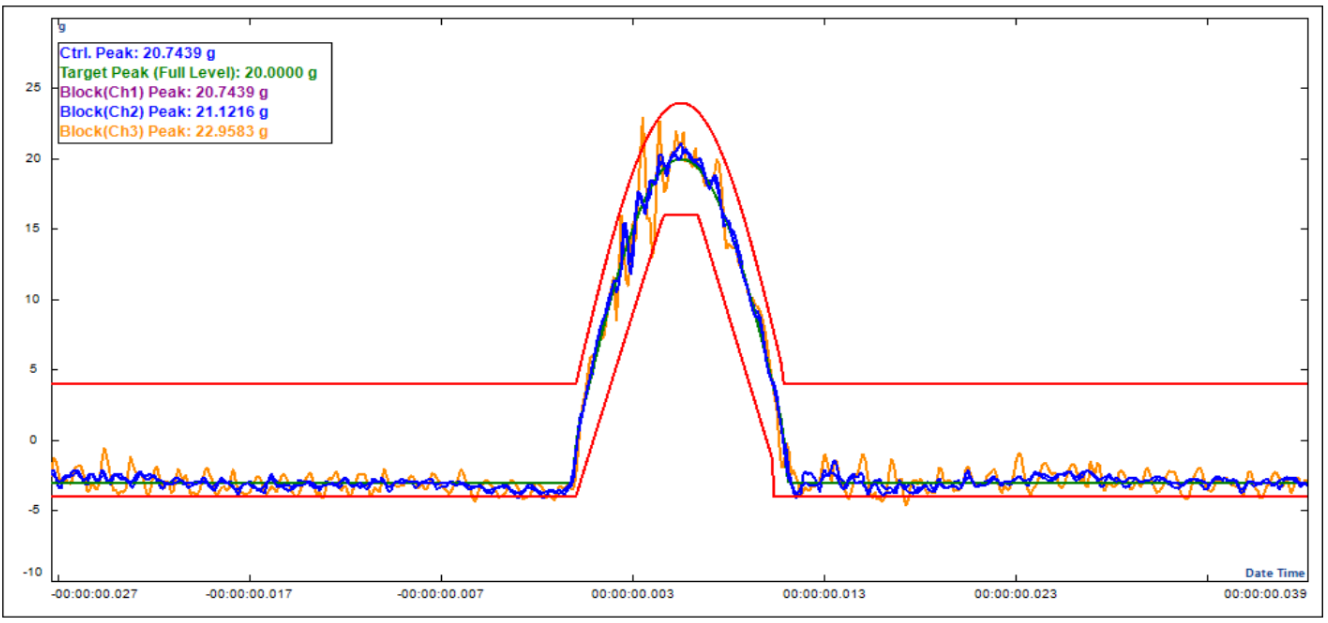
Figure 2. Graph displays the acceleration the motor is subjected to with a 20g peak acceleration, 11ms duration of nominal pulse, half-sine pulse type.
Vibration resistance was evaluated through resonance frequency searches across all major axes, with applied frequencies of 2 Hz, 13 Hz, and 100 Hz; no resonance frequency was detected. Furthermore, an endurance test was performed, applying 30 Hz vibration for 90 minutes consecutively in each major axis direction. These tests revealed no mechanical or operational damage or reduction in function.
Field Study: Active Stabilization Platform for Neonatal Transportation
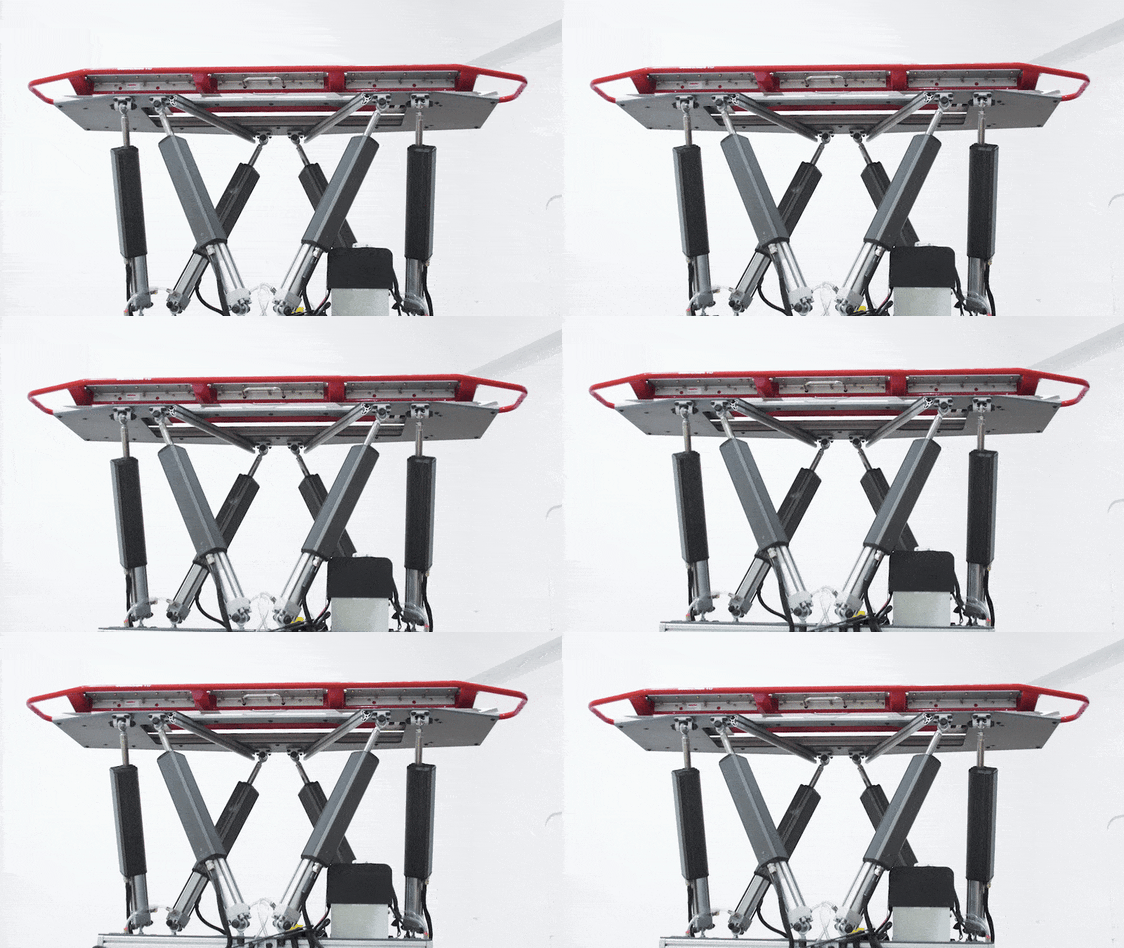
In a recent application with the National Research Council (NRC), the Children’s Hospital of Eastern Ontario (CHEO), and Carleton University, ORCA motors were used to power a six-degrees-of-freedom active stabilization platform used to stabilize a neonate traveling in an incubator to a hospital. The ORCA motors' tight integration, internal position sensing, feedback loops, and PID control algorithms were capable of seamlessly countering vibrations. This project showed that a multi-degree-of-freedom system powered by ORCA motors successfully dampened the impact of dominant frequencies of an ambulance ride at 9 to 10 Hz. This level of shock and vibration tolerance is often required in heavy-duty linear actuators deployed on mobile platforms and within industrial equipment.
Corrosion-Resistant Actuation
Corrosion resistance is a key contributor to the long-term reliability of linear motor assemblies. Without resistance to corrosive environments such as moisture, salt spray, and harsh chemicals, components can begin to degrade, leading to electrical failures, performance impairments, increased maintenance costs, and ultimately a shortened lifespan. In any assembly with moving parts, corrosion most often affects the running surface where the shaft and bushing meet. This vulnerability stems from continuous wear on these surfaces and their repeated exposure to the operating environment. IP68 waterproof linear actuators are rated to withstand corrosive environments. Learn more about IP ratings and their meanings here.
The ORCA motor housing (stator) is made of anodized aluminum extrusion with overmolded rubber endcaps. The shaft is constructed from 304 stainless steel, a widely adopted stainless steel alloy that provides strong corrosion resistance in most operating environments. When paired with the iglidur G bushing from igus used in the assembly, this material combination reduces friction and shaft wear at the primary mechanical interface, contributing to extended service life without reliance on lubricants or additional protective coatings.
ORCA motors were validated with a salt spray test by QAI Laboratories. ORCA motors ran continuously while subjected to salt spray for 168 hours (one week). Following testing, the motors continued to operate without errors.
Cold Temperatures
Low-temperature environments commonly degrade electromechanical systems due to increased lubricant viscosity, material contraction, reduced flexibility of seals and wiring, and the formation of condensation during temperature cycling. These effects can increase friction, alter clearances, and lead to inconsistent performance or premature wear. Cold operating conditions also exacerbate corrosion risk when moisture condenses inside enclosures as temperatures fluctuate between cold and warm states. In traditional linear motors, these factors often result in reduced motion consistency, decreased force output, and diminished positioning accuracy. Systems that rely on internal lubricants are particularly susceptible, as lubricant stiffening at low temperatures can significantly increase friction and accelerate component wear.
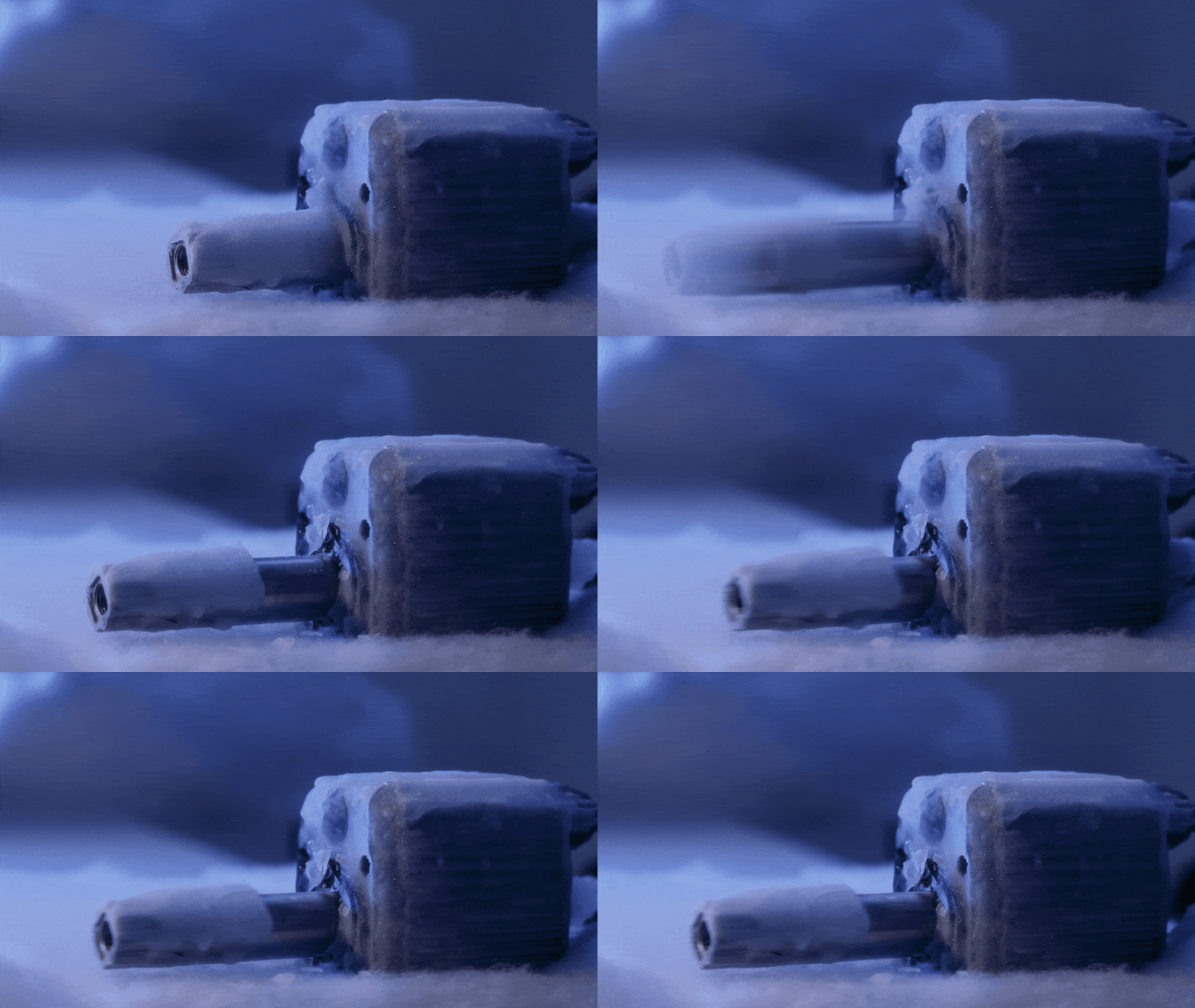
ORCA motors are rated for operation down to -20 °C. To evaluate performance beyond nominal operating limits, extended cold exposure testing was conducted by QAI Laboratories. The motors were subjected to -50 °C for a duration of 16 hours and maintained full functional operation.
Final Thoughts
Applications operating in extreme environmental, mechanical, and thermal conditions place significant demands on linear actuation systems. Exposure to moisture, vibration, corrosion, and low temperatures can quickly compromise performance and shorten device lifespan. As demonstrated through laboratory validation and real-world deployment, actuator reliability in these conditions is not achieved through a single design feature, but through a combination of material selection, simplified mechanical architecture, and robust environmental protection.
For many industrial applications, rugged linear actuators are required to minimize downtime, sustain performance, and ensure system reliability. From industrial automation to remote and mobile operating platforms, the ability to withstand extreme environments while delivering precise, repeatable motion is essential. Designing for these conditions from the outset enables longer service life, reduced maintenance requirements, and greater confidence in system performance across a wide range of demanding applications.
.png?width=1100&height=163&name=CTA%20Banners%20for%20Blogs%20(7).png)