
In In Motion November, we share a new application story with LIMBS International where ORCA Motors are being used in a pediatric prosthetics application. We release new quick start resources, including getting started with MATLAB & LabVIEW. Finally we release a high impact story with the National Research Council, Children's Hospital of Eastern Ontario, and Carleton University, featuring an active spring damping platform in neonatal transportation systems.
Fatigue Testing Pediatric Prosthetics: Force Feedback, Backdrivable, Repeatable ORCA™ Motors || LIMBS International Application Story
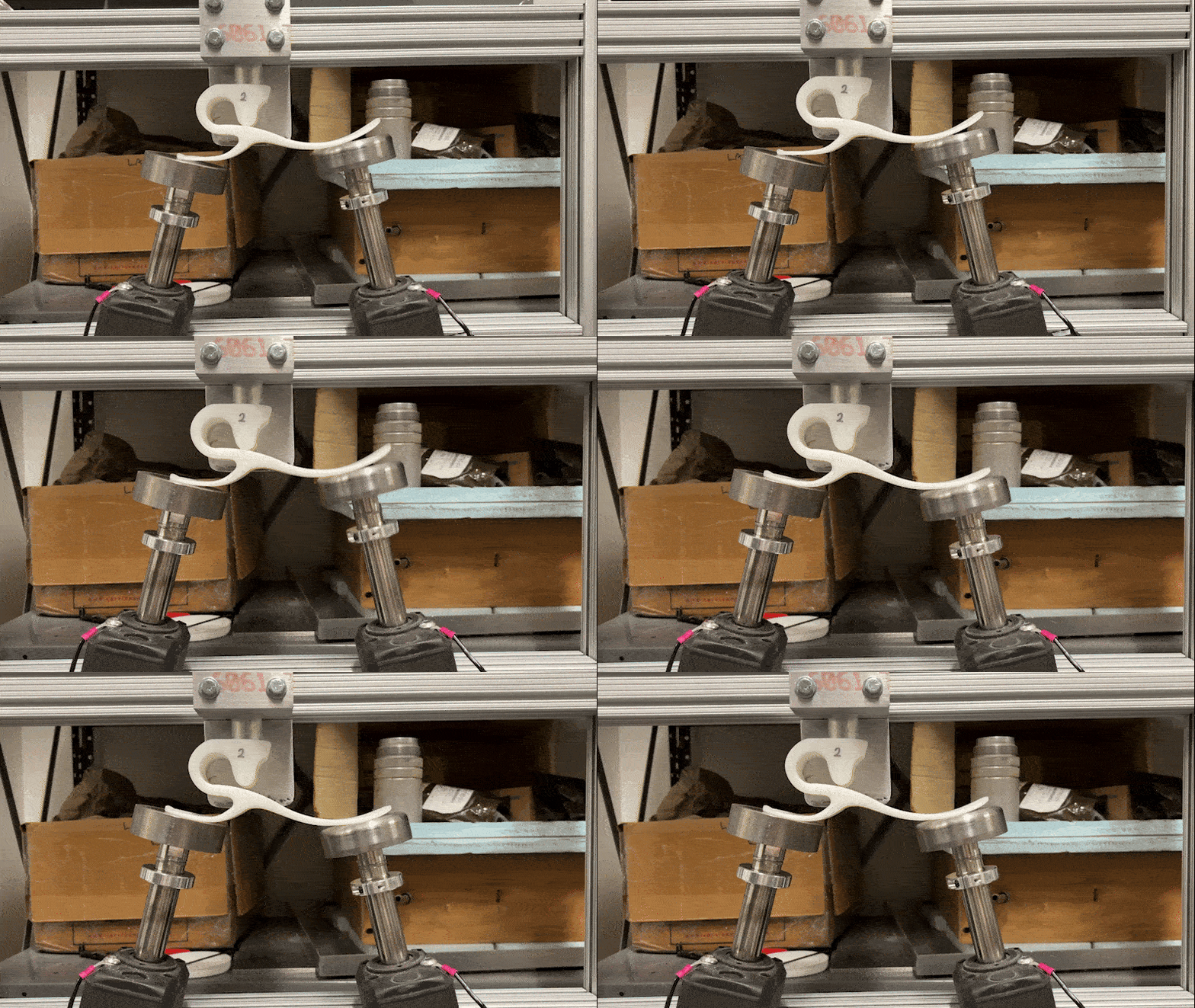
LIMBS International and the US Naval Academy Capstone Engineering Team set out to create an affordable pediatric prosthetic foot for children in developing countries. To certify their design, they used ORCA Motors to recreate a child’s heel-to-toe walking motion for more than 1.5 million load cycles. The motors delivered precise, repeatable, force-controlled actuation that exposed weak points, protected stiff prototypes, and kept long-duration tests running reliably with minimal downtime.
The Challenge - High force requirements, more than 1.5 million cycles, in a time-constrained project.
The ORCA-15-48V Solution - Precise, repeatable force control for long-duration fatigue testing.
Getting Started Resources || Achieve Motion Within Minutes with MATLAB & LabVIEW
.png?width=1100&height=619&name=Youtube%20Thumbnail%20Template%20(76).png)
ORCA Motors can be used with a variety of software and programming languages, including MATLAB and LabVIEW, which can be used in tandem with IrisControls. Explore our short video tutorials on getting started with MATLAB and LabVIEW to get your ORCA Motor up and running within minutes.
When to use MATLAB & LabVIEW: These software platforms are best suited for using modes (Force and Position modes) that don't require consistent external inputs, like Kinematics and Haptics mode.
ORCA Motor Powered Active Spring Damping Platform in Neonatal Transportation Systems
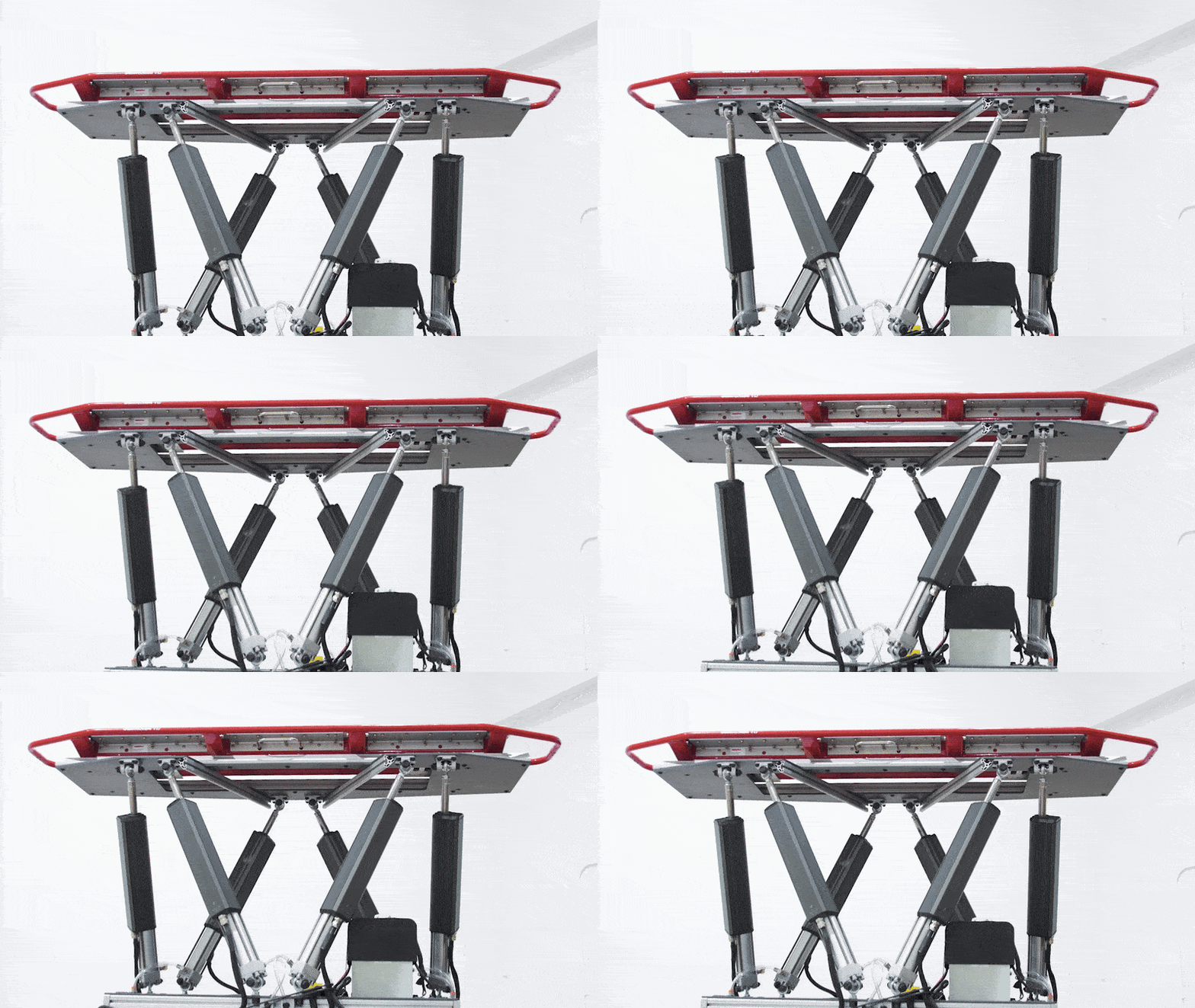
An innovative project with the National Research Council (NRC), Children's Hospital of Eastern Ontario (CHEO), and Carleton University studies alternatives for neonatal transportation, a vital lifeline for neonates. Neonatal transport often exposes infants to complex, multi-directional motion. These movements are not just uncomfortable but can have lasting consequences. Enter the RAVEN-6DoF Platform Solution, powered by ORCA Motors, as a studied alternative.
"ORCA Motors are uniquely suited for this application when you're testing active stabilization. ORCAs, being freely positionable and backdrivable, means we can change the damping and stiffness adjusting the frequencies to effectively stabilize the infant on its trip to the hospital."
- Kyle Hagen | CTO of Iris Dynamics
READ THE FULL STORY & WATCH THE SHORT DOCUMENTARY
