
Reduce Velocity Ripple, Eliminate Cogging, and Improve Force Stability in Dynamic Testing Environments
If your test results drift when speed changes, if velocity ripple shows up in your data, or if you find yourself retuning control loops every time a load condition shifts, the problem may not be your sensor or your model. It may be your motion system. In test and measurement applications (T&M), motion is not just movement; it is the foundation of data integrity.
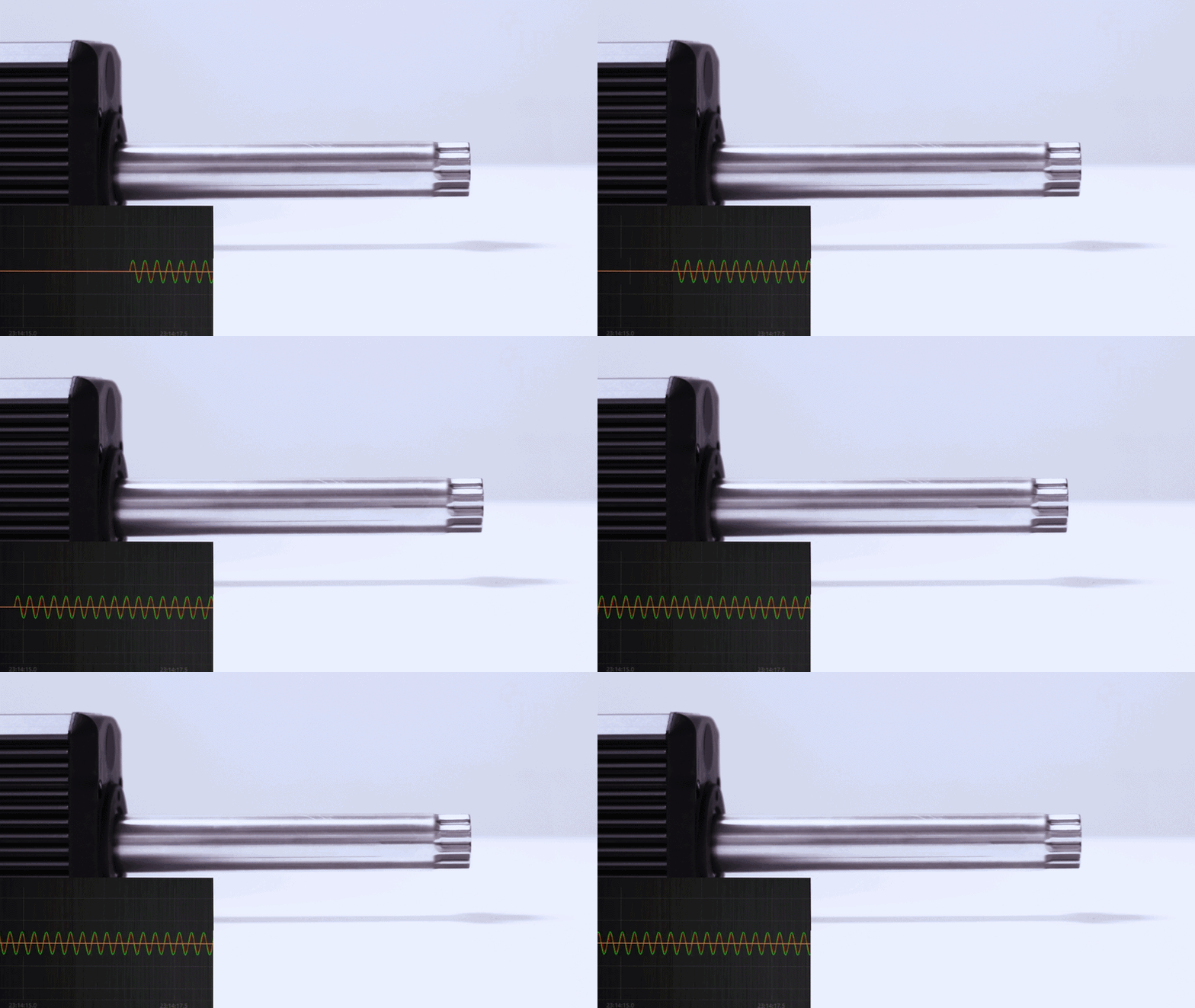
Figure 1. ORCA motor performing rapid oscillations.
Motion fidelity describes how accurately a motion system delivers its commanded motion profile, not only in terms of kinematics such as position, velocity, and acceleration, but also in how faithfully its dynamic force response matches the desired behaviour. It is what separates clean data from contaminated results. In T&M applications, motion fidelity and measurement quality are inseparable. Whether verifying mechanical systems, calibrating sensors, or simulating real-world conditions, the smoothness and accuracy of motion directly influence the integrity of captured data.
The Hidden Source of Measurement Errors
Measurement quality broadens this definition to include the precision, repeatability, and noise characteristics of both actuators and sensors. High-fidelity motion systems produce cleaner, more reliable data, reducing uncertainty in results and minimizing the need for compensation or filtering. Iris Dynamics’ ORCA™ motors, which integrate both position and force sensing directly within the actuator, embody this relationship. Designed for smooth, predictable motion across a wide range of loads and speeds and capable of high-rate (1 kHz) data capture, these motors remove many of the hidden instabilities and integration challenges present in traditional actuation architectures.
Why Traditional Linear Actuators Are Corrupting Your Data
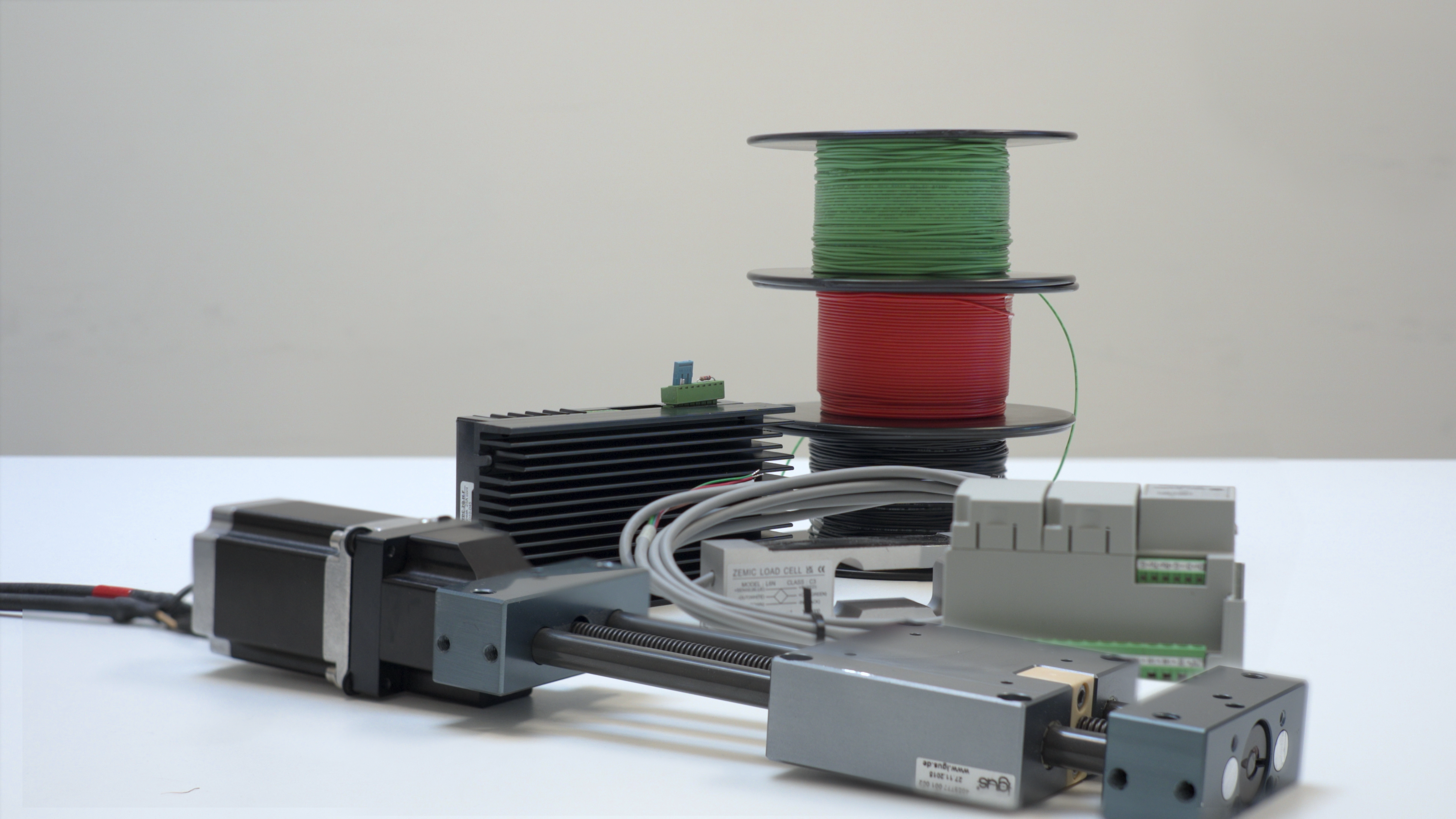
Traditional linear stages, which convert rotary motion using ball screws, lead screws (seen in Figure 2), or belt drives, introduce mechanical imperfections such as backlash, drive‑train elasticity, and frictional variation. These systems also rely on multiple external components, drivers, controllers, and sensors, which add electrical noise and feedback delay, reducing overall control bandwidth. Even slight imperfections can distort results, especially when motion must repeat precisely under varying speeds, loads, or force conditions.
 |
.png?width=3840&height=2160&name=Untitled%20design%20(35).png) |
| Components Required to Operate a Lead Screw Motor | Components Required to Operate an ORCA Motor |
Figure 2. Lead screw motor component compared to electromagnetic ORCA motor components.
Direct‑drive linear motors remove the conversion mechanics but still face integration challenges. External servo drivers and encoders extend feedback paths, introducing phase lag and limiting stability. Iron‑core motor designs add cogging torque, producing cyclic drag forces that show up in velocity and force data. These disturbances make it difficult to reduce velocity ripple or fully eliminate cogging torque through software compensation alone. Achieving true cogless linear motion requires addressing these effects at the architectural level rather than masking them in control software, which cannot fully eliminate them and may introduce additional artifacts.
Where Is Your Irregular Data Coming From?
Mechanical interfaces such as couplings, bearings, and alignment‑sensitive feedback devices can add compliance and resonance, making control tuning a continual task. Engineers often spend significant time diagnosing whether irregularities originate from the actuator, the sensing chain, or the device under test. Any ripple or transient in actuator performance can propagate through the measurement loop, blurring the distinction between true system behaviour and actuation error. Maintaining predictable, disturbance‑free motion can be the limiting factor in achieving high‑fidelity measurements with conventional linear motion architectures.
Stability Over Resolution
Precision in motion control is often equated with resolution, the smallest measurable unit of movement. Yet in real-world T&M environments, this assumption can be misleading. A system with ultrafine encoder resolution but unstable motion will deliver poor measurement repeatability. On the other hand, a system with slightly lower resolution but higher inherent stability may produce far more reliable results, making it easier to isolate devices under test behaviour.
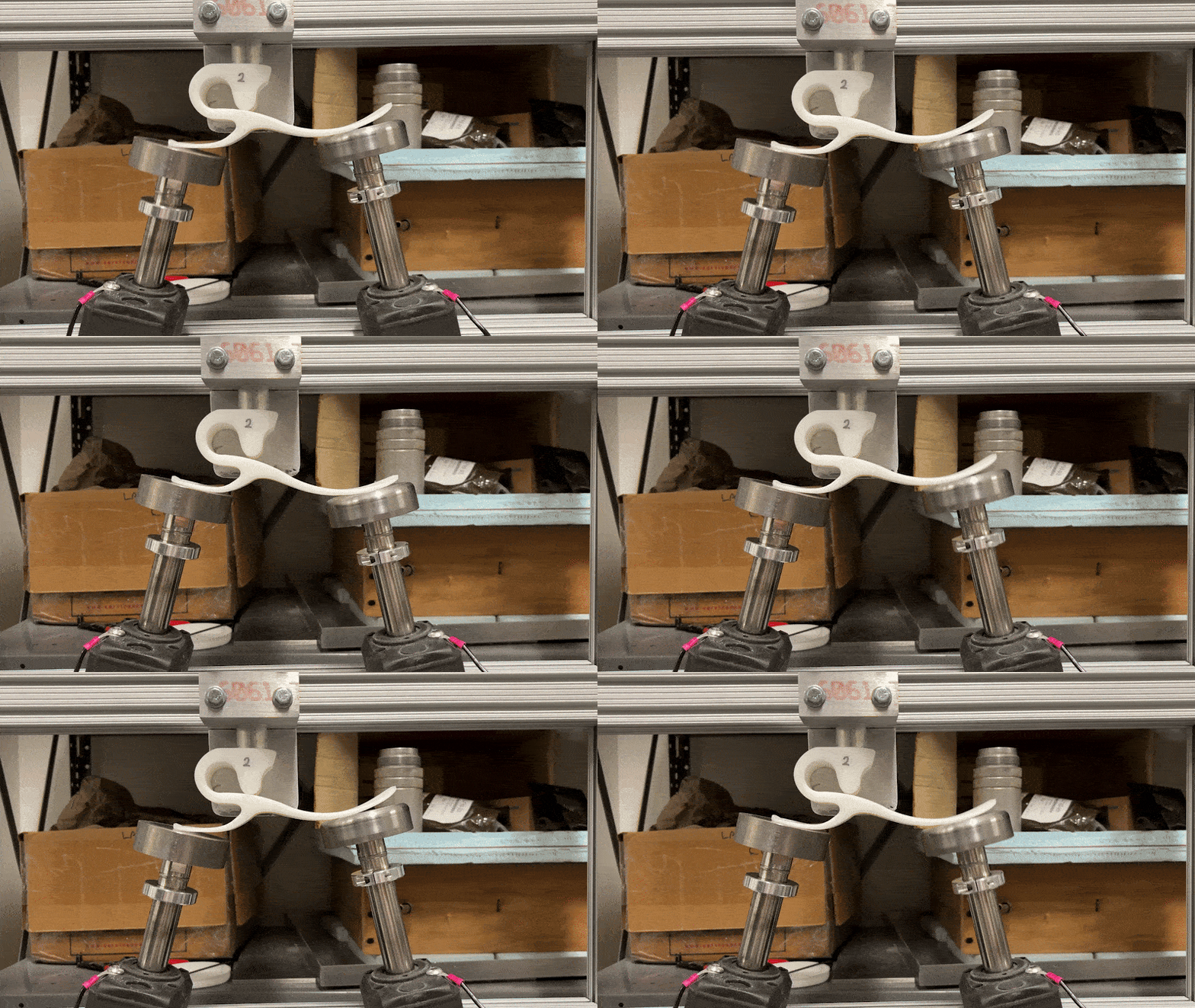
Figure 3. Two ORCA motors fatigue testing a pediatric prosthetic.
The defining trait of high-performance T&M motion systems is stability, the ability to maintain commanded trajectories without unintended oscillations or drift. Engineers often require this to remain true under varying speed and load conditions. Smooth, repeatable motion simplifies control design, reduces tuning effort, and ensures that sensor readings reflect the test, not the actuator. In applications such as motion control for fatigue testing (shown in Figure 3), where repeated cycles occur under changing force profiles, stable motion under varying loads is often more important than raw encoder resolution. Stability, rather than raw resolution, is what enables engineers to trust their measurements over time and across varying conditions.
Force Smoothness and Control Performance
Force smoothness is the foundation of precise motion control. Any disturbance in generated force immediately translates into unwanted velocity ripple, especially in closed-loop force control systems where the motor and sensor continuously influence one another. When force output is consistent, the control loop stabilizes naturally, resulting in cleaner motion profiles and improved measurement fidelity.
This smoothness also simplifies control tuning. Engineers can use more straightforward control laws, reduce reliance on extensive filtering, and achieve predictable behaviour even when loads, speeds and applied forces vary. A stable, ripple-free force profile means fewer compensations, shorter commissioning time, and more time spent gathering useful data.
ORCA Motor Architecture Offers Integrated Position and Force Feedback
At the hardware level, the ORCA architecture as shown in Figure 4, embodies mechanical simplicity. Each ORCA motor is a direct-drive unit that integrates both position and force sensing within the actuator body. With no gearboxes, couplings, or external encoders, the system removes traditional sources of error such as backlash, alignment drift, and electrical noise from sensor cabling. The motor is designed to deliver cogless linear motion, resulting in smooth, consistent force output across the stroke. Integrated force sensing actuators enable low latency motion control with minimal feedback delays. With integrated position and force feedback, the system allows for tight, high-bandwidth control loops with a 1 kHz capture capability.
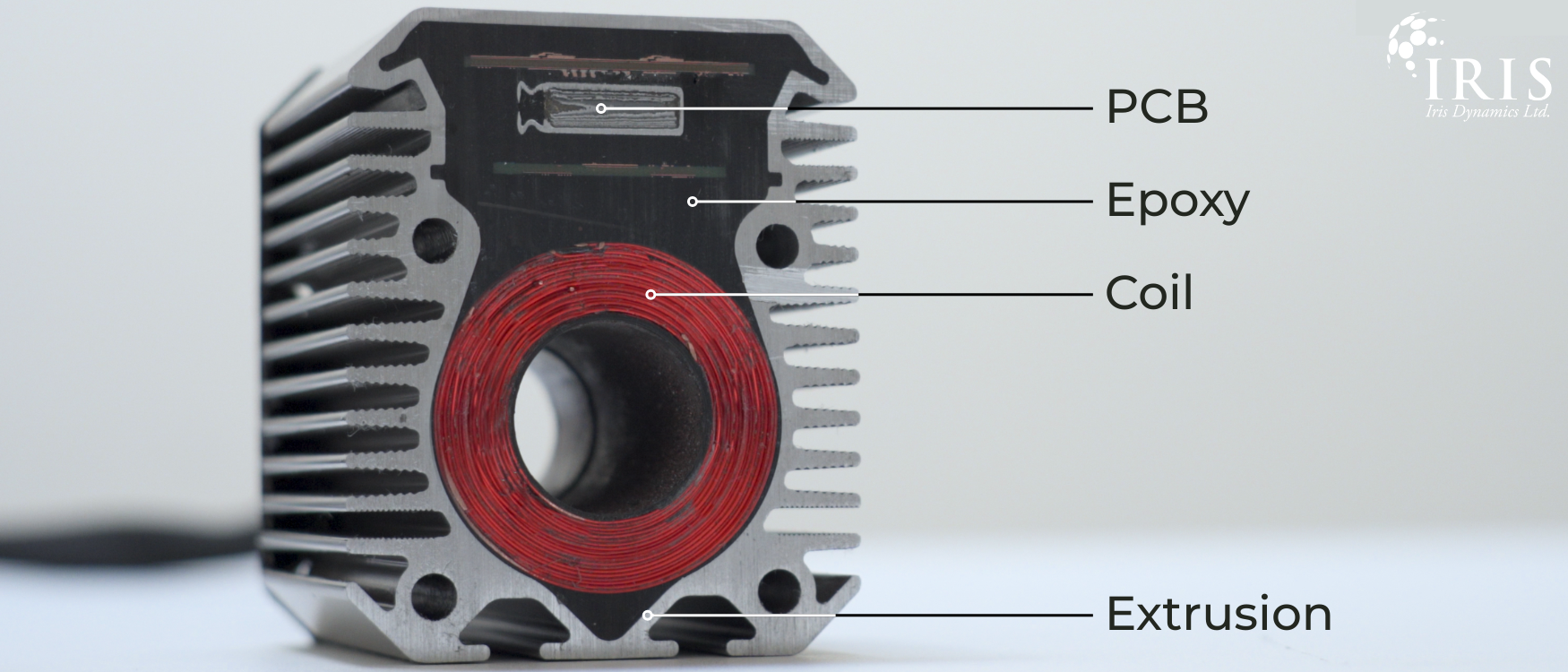
Figure 4. Cross section of an ORCA motor with visible internal components and epoxy filling the surrounding volume.
The consolidation of components found in ORCA motors minimizes mechanical and electrical interfaces. This reduction in interfaces translates into fewer points of failure and shorter setup times. It also allows for testing setups where both force application or sensing as well as position or speed are important. From a software perspective, ORCA motors can perform configured motion profiles from within the IrisControls software interface, or integrate with existing testing models using MATLAB, LabVIEW, C++, or Python.
 |
.webp?width=188&height=125&name=labview-logo%20(1).webp) |
.png?width=111&height=125&name=ISO_C++_Logo.svg%20(1).png) |
 |
Application Fit and Limitations
ORCA motors are not designed for applications demanding nanometer-level positioning or absolute metrology-grade resolution; such use cases still benefit from specialized positioning systems or high-accuracy load cells in the loop. Where ORCA motors excel is in environments requiring force linearity, smooth velocity control, and repeatable, disturbance-free motion across variable test configurations. These include mechanical characterization, friction and wear studies, and material testing under dynamic loads.
In these scenarios, the ORCA’s inherent force smoothness and integration ease reduce motion artifacts and simplify both mechanical and electronic system design. Installation is straightforward, and once operational, the system remains consistently stable.
Final Thoughts
Precision should never be viewed solely through the lens of measurement resolution. True precision in test and measurement lies in the repeatability and stability of motion. The ability to impose controlled forces and motions without contamination from unwanted dynamics. By integrating sensing and actuation into a single, low-complexity unit, Iris Dynamics’ ORCA motors deliver a level of motion fidelity that traditional architectures struggle to match. The ORCA motor offers smoother force generation, simplified integration, and stable motion across conditions. It allows engineers to measure confidently, knowing that the motion system is faithfully reproducing the behaviour, not influencing the results.
.png?width=1100&height=163&name=CTA%20Banners%20for%20Blogs%20(9).png)