
Massachusetts Institute of Technology (MIT) Application Story
Researchers at the Massachusetts Institute of Technology are studying new methods for safely discharging lithium-ion batteries as part of ongoing work in battery safety, testing, and processing. The team is developing an experimental platform to investigate battery discharge behaviour under tightly controlled mechanical conditions. This research focuses on using mechanical perforation as an alternative to conventional battery discharge methods, with a goal of developing a faster, safer, discharge method. To support this work, the team requires a high-performance linear actuation system capable of delivering precise, repeatable motion inside a controlled test environment.
|
Objective |
Iris Dynamics Solution |
Outcome |
|
Develop a faster, safer method for discharging lithium-ion batteries using controlled mechanical perforation as a superior alternative to traditional, corrosive aqueous salt solutions. |
Integrate the ORCA-6-24V linear motor, which provided the high speeds, IP68 environmental protection, and precise closed-loop control necessary to operate reliably inside a high-pressure vacuum chamber. |
The system successfully supported over 100 experiments with consistent results, significantly reducing the implementation time by utilizing built-in control software and providing a repeatable foundation for future battery safety developments. |



Definitions
| Lithium-Ion Battery Discharge | The process of removing the stored electrical energy from a battery cell which is a critical safety step before recycling or disposal to prevent fires or explosions. |
| Aqueous Salt Solution Discharge | A traditional disposal method where batteries are submerged in conductive salt water to short-circuit them, though it often produces toxic gases and corrosive waste. |
| Mechanical Perforation | The act of physically puncturing a battery casing with a tool (like a nail) under controlled conditions to initiate a gradual and safe release of energy. |
| Closed-Loop Control | A system that uses feedback from the sensors to automatically adjust the motor's performance, ensuring the tool reaches exact positions and speeds regardless of resistance. |
| Dwell Time | The specific duration that the perforating tool remains stationary inside the battery after the initial puncture, which is a critical variable in studying battery response. |
| IP68 Rating | An international standard for environmental protection; IP68 indicates the device completely dust-tight and can withstand long-term immersion in water or operation in harsh, pressurized gas environments. |
The Challenge: Achieving Precise and Repeatable Perforation Inside Vacuum Pressure Chambers
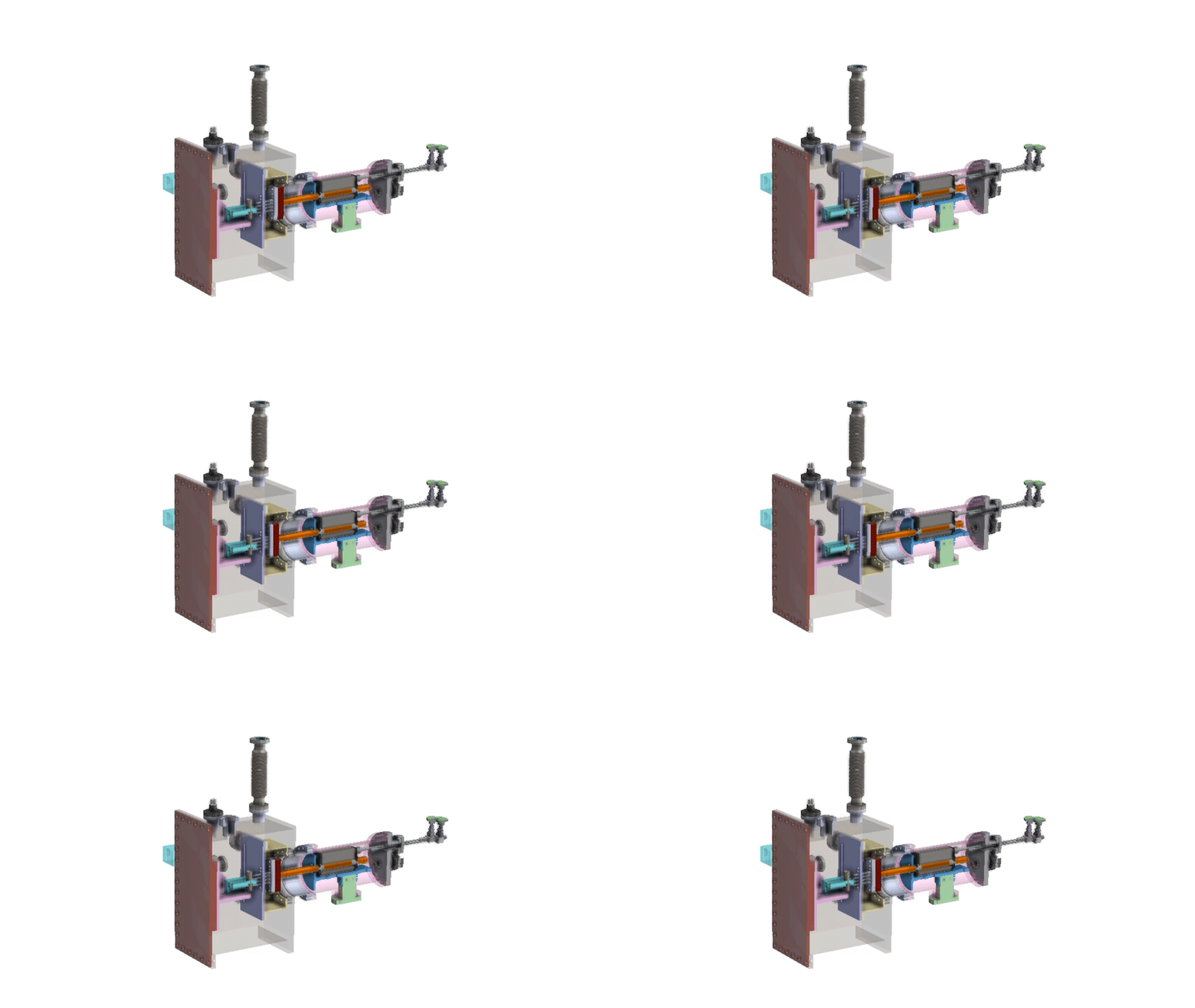
A common method of discharging batteries involves an aqueous salt solution discharge, where the batteries are submerged in a conductive salt water solution ultimately short-circuiting them. This method is inexpensive and can process cells of different sizes at the same time, however, it is also highly corrosive and releases toxic flammable gases requiring subsequent waste water treatment. The MIT research team is studying a new method for discharging lithium-ion batteries using controlled perforation, slowly and safely, generating less waste. Unlike conventional penetration tests that often trigger fire or rapid failure, this approach relies on carefully controlling how the battery is punctured so it can discharge more gradually.
This type of perforation demands a lot out of its actuation system. The puncture speed, insertion depth, and the amount of time the tool remains inside the battery must be tightly controlled and repeatable. Small variations in motion can significantly change the outcome of a test. The experiments are performed inside a vacuum and high-pressure chamber with harsh gases. This requires an actuator that can operate reliably in a sealed environment while delivering both high speed and precise linear control.
ORCA-15-48 Linear Actuator as an Ideal Fit
High-Speed, Precise Linear Actuation in a Sealed Test Environment
High Speed & Acceleration
The team required a rugged and highly repeatable actuation system with high speeds and acceleration, that did not compromise accuracy. The ORCA-6-24V linear motor was chosen for high speeds of 3+ m/s and position resolution of ±150 μm all within a fully enclosed form factor. Precision control was critical to the experiment as the duration that the nail remained inside the battery had a direct impact on the outcome of the perforation results.
Closed-Loop Control
Inherent closed-loop control was a key advantage for the team. While they initially expected to develop a custom control system, they were able to use ORCA’s built-in closed-loop control, significantly reducing implementation time. Precise control of puncture speed, insertion depth, and dwell time allowed the team to repeat experiments consistently, including accurately controlling how long the nail remained inside the battery–dwell time is critical when studying how batteries respond to perforation. The ability to precisely control shaft travel distance also provided flexibility as experimental setups and test parameters evolved. Achieving both precise positioning and high-speed motion simultaneously can be difficult with conventional systems, making the integrated control capabilities of the ORCA motor especially valuable.
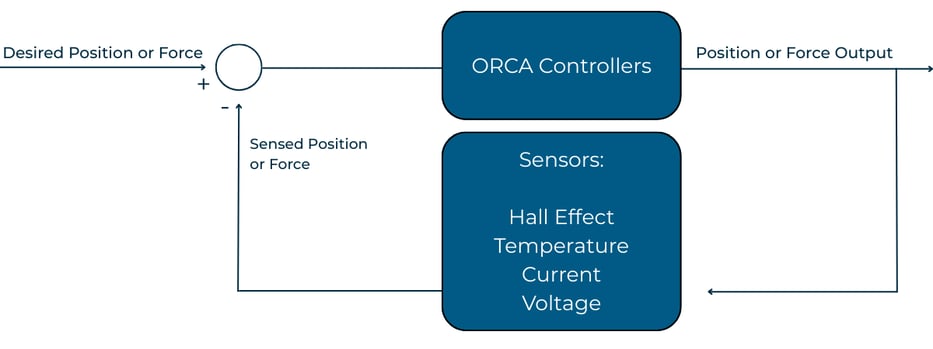
Figure 2. The ORCA Motors' closed-loop architecture.
Environmental Protection
Knowing they needed an environmentally robust solution, the ORCA motor’s fully enclosed design, with epoxy-potted construction, gave the team confidence that it could operate reliably inside the vacuum and high-pressure chamber containing harsh gases. ORCA motors are IP68 rated, meaning they are resistant to dust ingress and can survive temporary immersion. The team noted that the importance of this IP68 protection became even more apparent once the system was in operation, as it prevented contamination and degradation that can affect other motor technologies, particularly those with exposed or geared components.
Technical Specifications
| Force Capability | 600 N of peak force |
| High Speeds | Up to 1500 mm/s |
| Position Resolution |
±150 μm |
| Stroke Length | Configurable, approximately 120 mm used in this project |
| Shaft Length | 16" stainless steel shaft |
| IP68 Rating | Waterproof with a fully encapsulated epoxy-potted build |
| Motion Profiles | Programmable speed, position, and dwell time |
Integration
.png?width=381&height=381&name=Investor%20Banner%20QR%20Code%20(1).png) The ORCA linear motor was integrated as the core actuation system to provide accurate, repeatable control of the battery perforation process.
The ORCA linear motor was integrated as the core actuation system to provide accurate, repeatable control of the battery perforation process.
Mechanically, the motor was mounted within a dedicated housing, with a nail attached directly to the shaft to perform the perforation. An integrated cooling system was incorporated to support repeated operation during extended tests. The full assembly was installed inside a vacuum and high-pressure chamber, where it was exposed to harsh gases during testing. The inherent closed-loop control of ORCA motors accelerated integration time.
Rather than developing a custom control system from scratch, the team was able to use existing control functionality to achieve precise positioning and speed control with minimal development effort. IrisControls was used as the primary software interface, making the system accessible for student researchers, alongside existing LabVIEW and MATLAB workflows.
Conclusion
The ORCA-6-24V linear motor enabled the MIT research team to build a reliable and highly controllable experimental platform for studying battery discharge through perforation. Its combination of high-speed linear motion, precise closed-loop control, and environmental sealing allowed the team to execute puncture events with consistency across a wide range of operating conditions. The system has supported over 100 experiments conducted inside vacuum and high-pressure chambers, providing the flexibility to adjust motion profiles, shaft travel, and test parameters as the research evolved. This level of control and repeatability has been critical for exploring how different perforation conditions influence battery discharge behaviour. By reducing integration effort and supporting repeatable testing in a harsh environment, the ORCA-based system provided a strong foundation for continued experimentation and future development of safer, more efficient battery discharge techniques. .