
In our September edition of In Motion, we share key technical updates and practical applications across engineering and ocean technology. This issue features an application story from the University of North Carolina at Charlotte on automating router bit wear testing with force control, alongside a new technical note highlighting strategies for achieving low friction. Additionally, it includes a new Iris Tutorial on setting up your ORCA-EIP™, and a recap of the recent COAST Ocean Tech Live Demo Day that we attended this month.
Automating Router Bit Weld Testing with Force Control | University of North Carolina at Charlotte Application Story
![Automated router bit weld testing system using an ORCA™ motor for force-controlled impact testing [GIF]](https://irisdynamics.com/hs-fs/hubfs/SummaryforIRIS1-ezgif.com-video-to-gif-converter.gif?width=800&height=450&name=SummaryforIRIS1-ezgif.com-video-to-gif-converter.gif)
How do you turn a manual hammer test into a repeatable, automated quality-control process?
When a leading industrial manufacturer needed to eliminate operator variability in testing the weld strength of their router bits, the University of North Carolina at Charlotte engineering team has nine months to automate the process. The ORCA™ motor's closed-loop force control and integrated force feedback enabled the system to deliver and verify consistent impact force on every cycle, reducing operator variability without an external load cell.
Achieving Low Friction with ORCA™ Motors | How to Install & Replace Bushings
![Technical note on how to install and replace bushings to maintain low-friction motion [PDF]](https://irisdynamics.com/hs-fs/hubfs/TN260608%20-%20Technical%20Note%20Graphic%20(1)-1.png?width=640&height=640&name=TN260608%20-%20Technical%20Note%20Graphic%20(1)-1.png)
Bushings are the only point in an ORCA motor where the shaft and stator make contact, helping the motor maintain smooth, low-friction motion. Over time, replacing these low-friction wear components is key to maintaining force accuracy and system performance. Learn how to identify your bushing type, follow step-by-step replacement best practices, and determine when retainers or lubrication can extend motor life in tough conditions.
How to Connect ORCA Motors to an Allen-Bradley PLC with the ORCA-EIP™ ![alt="Iris Tutorials: How to set up an ORCA-EIP [VIDEO]"](https://irisdynamics.com/hs-fs/hubfs/Iris%20Tutorials%20YouTube%20Thumbnail-Sep-28-2026-06-12-12-9383-PM.png?width=989&height=556&name=Iris%20Tutorials%20YouTube%20Thumbnail-Sep-28-2026-06-12-12-9383-PM.png)
Ready to integrate seamless motion control into your Rockwell Automation setup? In our latest Iris Tutorial, we walk you through how to connect, power, and configure your ORCA-EIP™ device to control multiple ORCA motors directly from your PLC. See how to configure your EtherNet/IP network, integrate with Studio 5000, and simplify your motor set up.
Ocean Tech Live: Demo Day | Submersible Force-Controlled Motors for Marine Applications
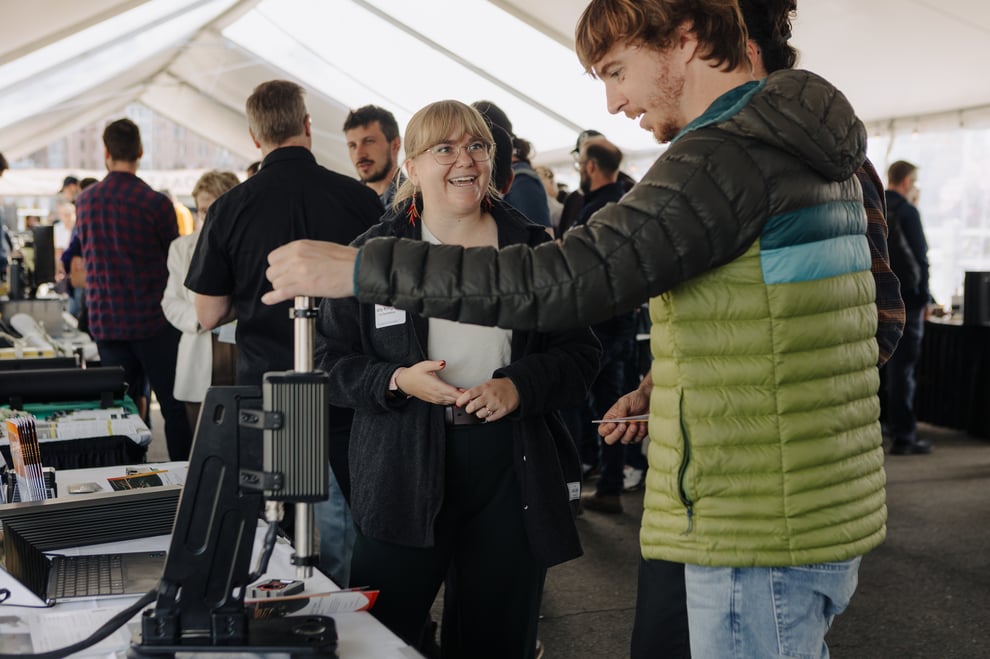
Underwater robotics demand precise, responsive motion in dynamic and unpredictable environments. At COAST Ocean Tech Live, we showcased how ORCA™ motors combine force control, real-time feedback, and an integrated submersible design to meet the demands of maritime applications.
